
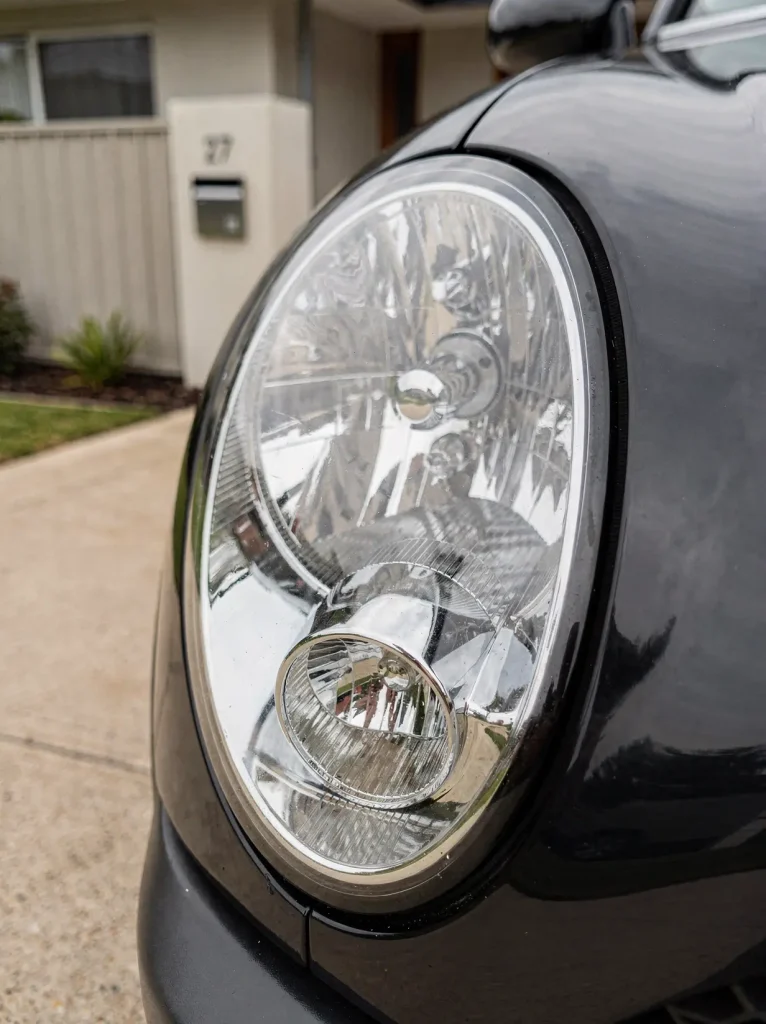
You walk up to your car parked outside a Fremantle cafe and it looks clean enough. Then you run a finger across the bonnet and it comes away tinged red. Open the door and there’s fine sand gathered in the seal. Tilt your head against the light and a hazy film covers the glass and paint. That’s three separate contaminants sitting on one panel – and treating them as a single problem is exactly why casual wiping so often leaves scratches behind. Reading these signs and adjusting the approach to each material is daily work for car detailing specialists, because red dust, beach sand and sea spray each need to be handled on their own terms.
Let’s break down where each one comes from, how it behaves on your paint and interior, and why a one-size-fits-all clean tends to do more harm than good.
Prefer to watch or listen?
Listen onApple Podcasts
Red Dust: Iron-Rich and Abrasive
The reddish film you find on cars around Perth and the South West is carried in on inland and easterly winds, kicked up from gravel roads, roadworks and the vast dry country beyond the coast. It’s fine, but it isn’t soft. Much of it is iron-rich, which is why it stains rather than simply sitting on top of the finish.
Over time these particles work into the microscopic pores and texture of your clear coat. Once embedded, they resist a plain hose-down and can leave the paint looking dull or slightly lightened, as though the colour has faded in patches. Because the particles are hard, dragging them across the surface with a dry cloth is effectively rubbing your paint with grit.
Beach Sand: Fine Grit That Acts Like Sandpaper
Beach sand is a different beast. It’s coarser than airborne dust and it travels with you – on your shoes, your towels, your kids and your boot. It lodges in carpets, floor mats, door jambs and seals, and it hides in the folds of upholstery.
The danger with sand is mechanical. Each grain is essentially a tiny abrasive stone. When you casually wipe a dusty door sill or brush sand off a seat, you’re dragging those grains across trim and paint like sandpaper. This is a major source of the fine swirl marks and hairline scratches people notice on door edges and lower panels. Vacuuming lifts the loose grains, but sand that has settled deep into carpet fibres and seal channels needs more than a quick pass to shift.
Sea Spray: The Sticky Film That Binds the Rest
Sea spray is the quiet one. Living near the coast means a fine airborne mist drifts inland and settles on your car as a thin, slightly sticky film. On its own it looks like nothing more than a haze on the glass.
The problem is what that film does to the other two contaminants. It gives red dust and beach sand something to cling to. Instead of blowing off or rinsing away easily, particles get bound to the surface by the spray residue, building a combined layer that is far more stubborn than any single material. The UV and heat load that Fremantle cars carry can make matters worse, and we covered how summer sun affects your finish in an earlier piece worth revisiting.
Why the Combined Layer Is the Real Problem
Individually, each contaminant is manageable. Together, they compound. The sticky spray film traps and holds the abrasive dust and gritty sand, so what you’re actually looking at is a bonded crust rather than loose dirt sitting on the paint.
This is precisely why dry wiping is so damaging. When you swipe a cloth across that layer, you’re grinding embedded iron particles and sand grains into the clear coat in tight circles – the origin of most swirl marks. The film means the grit doesn’t lift cleanly; it smears and scores. The single most important habit is to never wipe a Fremantle car dry.
Safe Removal Principles for Each Contaminant
Professional cleaning follows a staged sequence for a reason. Each step exists to lift and float contaminants away before anything touches the paint under pressure. The core principles:
- Pre-rinse first. A thorough rinse softens the bonded layer and washes away the loose sand and dust that would otherwise scratch during washing.
- Add contact lubrication. Plenty of suds and slick product let any remaining grit slide rather than grind, protecting the clear coat during hand contact.
- Work top to bottom. The lower panels hold the most sand and road-thrown dust, so leaving them until last keeps that grit away from cleaner surfaces.
- Address embedded dust separately. Iron-rich particles bonded into the paint need a dedicated decontamination stage rather than more scrubbing.
- Treat the interior on its own terms. Sand in seals, mats and jambs needs extraction and detailed attention, not just a surface vacuum.
The logic is simple: remove what’s loose before you touch the surface, keep everything lubricated during contact, and give each material the specific treatment its texture and chemistry demand.
Because these three contaminants settle continuously and at different rates – depending on the day’s wind, the season and how close you live to the water – the real challenge isn’t just removing them once. It’s staying ahead of the buildup before it bonds. That raises a practical question every local owner eventually asks: how often a car in this climate genuinely needs attention to keep that combined layer from taking hold.